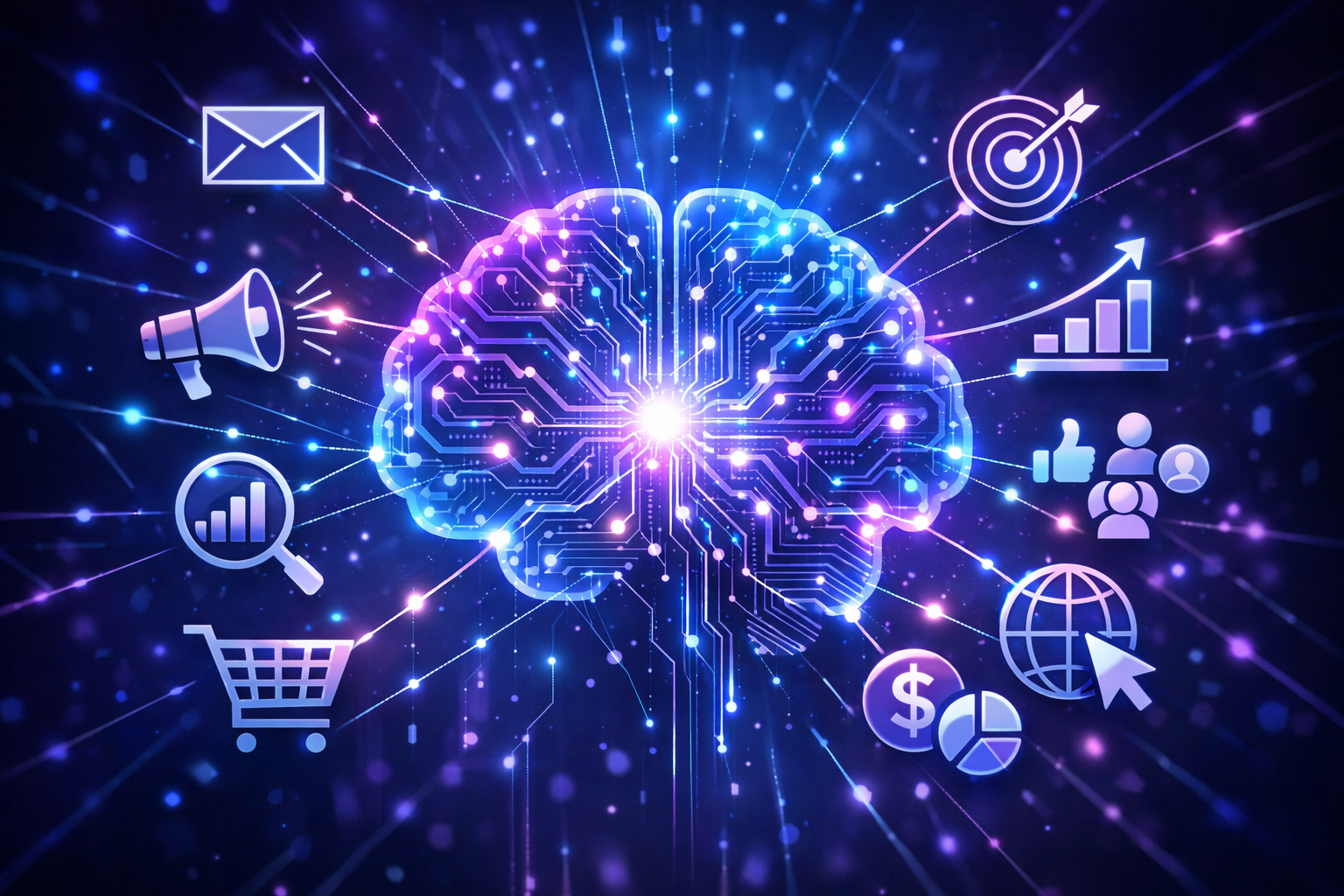
Digital marketing is entering a new era—one where AI, automation, and personalization work together to help businesses reach the right customers with the right message at the right time. For business owners, the opportunity is clear: improve efficiency, increase relevance, and build customer experiences that feel tailored rather than generic.
In this guide, we’ll break down the future of marketing and the most important digital marketing trends shaping how modern teams plan, launch, and optimize campaigns.
Why the future of marketing is shifting now
Today’s customers interact with brands across multiple channels—search, email, social, websites, chat, and more. At the same time, expectations are rising: people want fast answers, relevant recommendations, and experiences that reflect their interests.
That’s where AI and automation come in. They help marketers handle more data, reduce manual effort, and make recommendations that improve engagement—without requiring every decision to be made by hand.
AI in marketing: from “tools” to customer intelligence
AI is no longer limited to basic automation. In the future of digital marketing, AI is increasingly used to support three core marketing needs:
- Understanding customers: identifying patterns in behavior, engagement, and intent.
- Improving content effectiveness: assisting with writing, formatting, and content variations to better match audience needs.
- Guiding decisions: helping teams prioritize campaigns, audiences, and next best actions.
For business owners, the key takeaway is that AI can support smarter planning and more consistent customer experiences—especially when you have limited time and marketing resources.
AI marketing automation: what to automate (and what not to)
AI marketing automation goes beyond scheduling emails. It can tailor messaging, trigger campaigns based on behavior, and help route leads to the right follow-up.
Common areas where automation is particularly useful include:
- Lead capture and routing: sending the right follow-up based on form submissions, website actions, or lead scoring.
- Email and lifecycle journeys: automated onboarding, re-engagement, and post-purchase messaging with dynamic content.
- Chat and self-service support: answering routine questions and guiding visitors to relevant pages or offers.
- Campaign optimization: using performance signals to adjust targeting, timing, and messaging variations.
However, automation should be designed with your brand in mind. Not everything should be fully automated—especially anything that affects trust, compliance, or high-stakes customer interactions. A good strategy is to automate the repeatable work and keep human oversight for the decisions that require your judgment and expertise.
Personalization that customers actually notice
Personalization isn’t just inserting a first name into an email. In the future of marketing ai, personalization increasingly means:
- Relevant offers: recommending products or services based on browsing history, purchases, or stated interests.
- Context-aware content: showing messaging that aligns with a customer’s stage in the buying journey.
- Dynamic experiences: adjusting website sections, landing pages, or email content based on user behavior.
For business owners, this matters because personalization can improve conversion rates and reduce wasted spend—by focusing your budget on the audiences most likely to respond.
Digital marketing trends shaping the next 12–24 months
While every business is different, several digital marketing trends are becoming increasingly common across industries:
1) Search and content strategies that prioritize intent
Customers don’t just search for keywords—they search for solutions. Brands that build content around clear intent (informational, comparison, and decision stages) are better positioned to capture qualified traffic.
2) Smarter audience segmentation
Instead of relying solely on broad demographics, modern segmentation uses behavioral signals such as engagement level, page views, and funnel actions. AI can help teams refine these segments faster.
3) Multi-channel orchestration
Customers move across channels quickly. Brands that coordinate messaging across email, paid media, social, and website experiences tend to deliver more consistent customer journeys.
4) Better measurement and attribution practices
As privacy controls evolve, marketers need more thoughtful measurement. That often means combining analytics, first-party data, and realistic conversion tracking to understand what’s working.
5) Customer support becoming part of the marketing engine
When chat, help content, and service workflows are aligned with marketing goals, customers get answers faster and brands gain opportunities to convert and retain—without relying only on one-time campaigns.
A practical roadmap for business owners
If you’re considering AI and automation, you don’t need to do everything at once. Start with the highest-impact areas and build from there.
Step 1: Audit your customer journey
Identify where customers drop off or where your team spends the most time on manual tasks—lead follow-up, content updates, reporting, or customer onboarding.
Step 2: Choose one workflow to automate
Select a repeatable process such as:
- lead nurturing emails for new sign-ups
- a website-to-email follow-up sequence
- post-purchase or onboarding messaging
Launch with clear success metrics and iterate based on results.
Step 3: Improve personalization with first-party data
Use what you already collect—preferences, behaviors, purchase history, and engagement—so personalization is grounded in real customer signals.
Step 4: Establish governance and quality checks
Define brand guidelines for AI-assisted content, include review steps where needed, and ensure your automation respects customer expectations and privacy requirements.
How K10 Global can help
Implementing AI and automation successfully requires more than tools—it requires strategy, implementation, and optimization that fits your business model. At K10 Global, we help organizations design smarter digital marketing systems that support growth, efficiency, and better customer experiences.
If you want to strengthen your digital marketing in line with the future of digital marketing, we can help you assess your current setup, prioritize the right opportunities, and build an execution plan that your team can manage and scale.
Ready to future-proof your marketing?
Contact K10 Global today to discuss your goals and learn how AI-powered automation and personalization can support your marketing strategy. Let’s map out the next steps to improve customer engagement and drive measurable results.